1Password

Version: 1.1
Updated: Mar 17, 2026
1Password's User Management API using OAuth2 authentication. It supports user management operations including listing, retrieving, suspending, and reactivating users.
Actions
- List Users (Enrichment) - Retrieves a list of all users in the 1Password account.
- Get User (Enrichment) - Retrieves detailed information about a specific user.
- Suspend User (Containment) - Suspends a user account in 1Password.
- Reactivate User (Containment) - Reactivates a previously suspended user account.
1Password configuration
- Login to your 1Password Portal.
- Go to Integrations > Create OAuth2 Client.
- Enter the name of the OAuth2 client, for example,
Cloud SOAR Integration. - In the Redirect URI field, for example,
https://<url>/auth/callback. - Click Create to create the OAuth2 client.
- After the client is created, note down the Client ID and Client Secret.
- Make sure the OAuth2 client has the following permissions:
Get usersList usersSuspend usersReactivate users
- Find the Account UUID.
Configure 1Password in Automation Service and Cloud SOAR
Before you can use this automation integration, you must configure its authentication settings so that the product you're integrating with can communicate with Sumo Logic. For general guidance, see Configure Authentication for Automation Integrations.
How to open the integration's configuration dialog
- Access App Central and install the integration. (You can configure at installation, or after installation with the following steps.)
- Go to the Integrations page.
Classic UI. In the main Sumo Logic menu, select Automation and then select Integrations in the left nav bar.
New UI. In the main Sumo Logic menu, select Automation > Integrations. You can also click the Go To... menu at the top of the screen and select Integrations. - Select the installed integration.
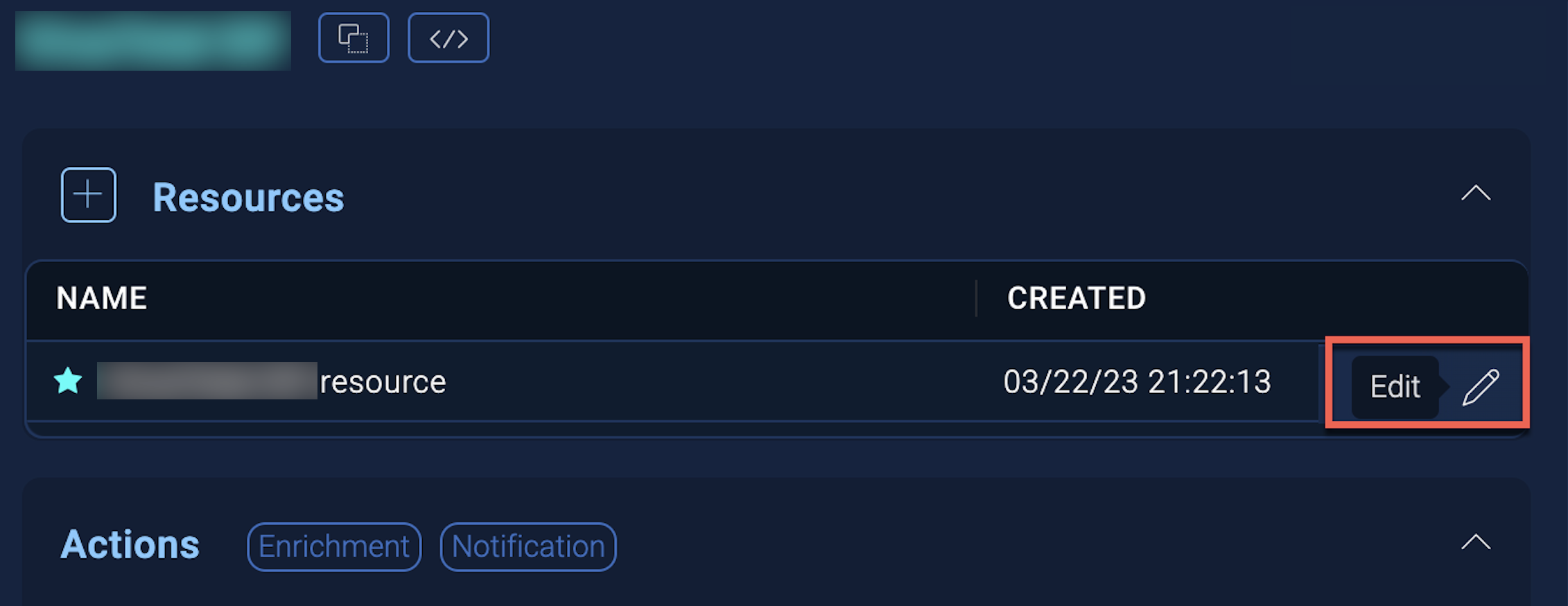
- Hover over the resource name and click the Edit button that appears.
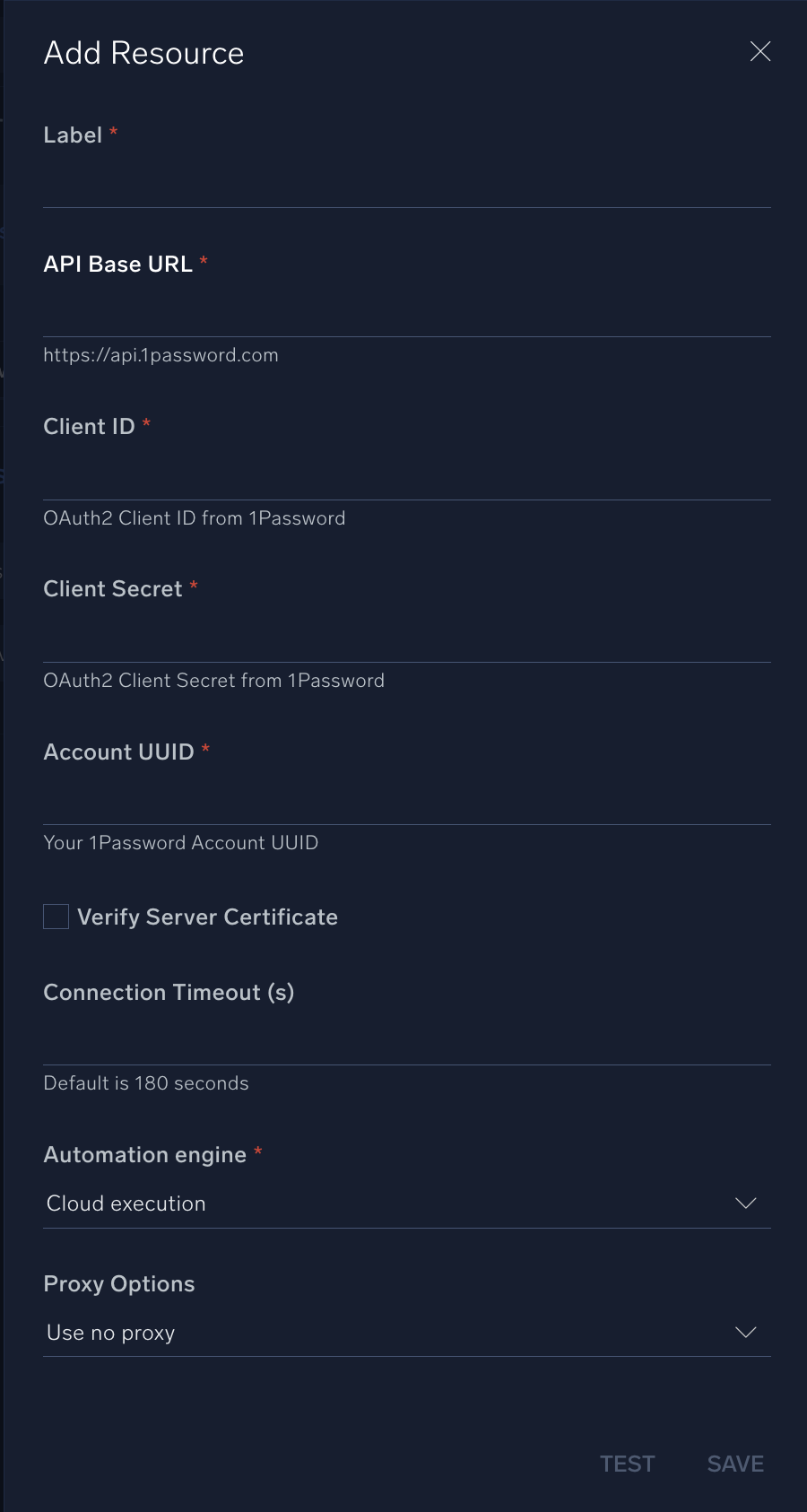
In the configuration dialog, enter information from the product you're integrating with. When done, click TEST to test the configuration, and click SAVE to save the configuration:
-
Label. Enter the name you want to use for the resource.
-
API Base URL. Enter your 1Password API URL, for example,
https://api.1password.com -
Client ID. Enter the Client ID.
-
Client Secret. Enter the Client Secret.
-
Account UUID. Enter the Account UUID.
-
Verify Server Certificate. Select to validate the server’s SSL certificate.
-
Connection Timeout (s). Set the maximum amount of time the integration will wait for a server's response before terminating the connection. Enter the connection timeout time in seconds (for example,
180). -
Automation Engine. Select Cloud execution for this certified integration. Select a bridge option only for a custom integration. See Cloud or Bridge execution.
-
Proxy Options. Select whether to use a proxy. (Applies only if the automation engine uses a bridge instead of cloud execution.)
- Use no proxy. Communication runs on the bridge and does not use a proxy.
- Use default proxy. Use the default proxy for the bridge set up as described in Using a proxy.
- Use different proxy. Use your own proxy service. Provide the proxy URL and port number.
For information about 1Password, see 1Password documentation.
Category
Identity and Access Management
Change Log
- Mar 17, 2026 - First Upload.